Pathophysiology of Asthma
Asthma is characterized by a predisposition to chronic inflammation of the lungs in which the airways (bronchi) are reversibly narrowed. Asthma affects 7% of the population of the United States 6.5% of British people and a total of 300 million worldwide. During asthma attacks (exacerbations of asthma), the smooth muscle cells in the bronchi constrict, the airways become inflamed and swollen, and breathing becomes difficult. This is often referred to as a tight chest and is a sign to immediately take medication.
Asthma causes 4,000 deaths a year in the United States. Medicines such as inhaled short-acting beta-2 agonists may be used to treat acute attacks. Attacks can also be prevented by avoiding triggering factors such as allergens or rapid temperature changes and through drug treatment such as inhaled corticosteroids and then long-acting beta-2 agonists if necessary. Leukotriene antagonists are less effective than corticosteroids, but have no side effects. Monoclonal antibodies, such as mepolizumab and omalizumab, are sometimes effective. Prognosis is good with treatment.
In contrast to chronic obstructive pulmonary disease and chronic bronchitis, the inflammation of asthma is reversible. In contrast to emphysema, asthma affects the bronchi, not the alveoli.
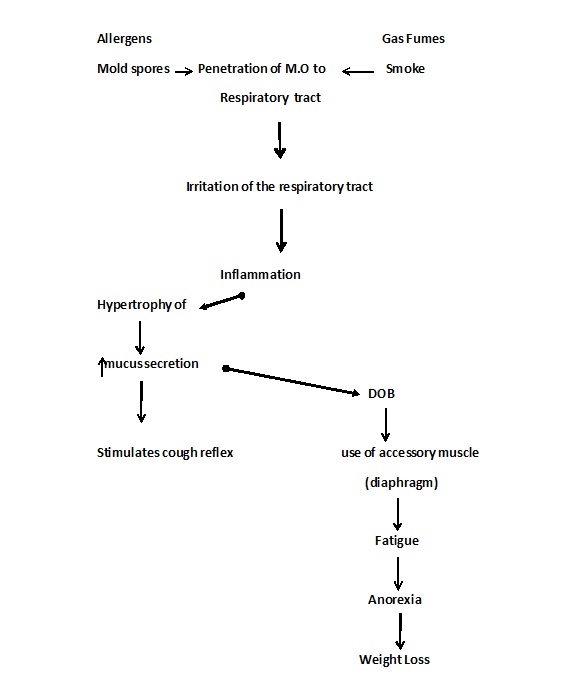
2 types :
- Extrinsic (Allergenic)
- Intrinsic
- hereditary
- hypersensitivity
- common in males
- non- allergic occurs after a resp. infection and over 35 y/o
Tx/Medications :
- sympthomimeter / b2-agonist
> salbutamol - anti- cholinergic ( anti-constriction)
- xanthine derivatives - relax smooth muscle
- during inflammation - steroids
*Avoid the ff. meds. B-PAC*
B- adrenergic
Propanolol
Anti-histamine
Anti-cholinergic
Cough suppressant
Nsg. Mgt. :
- Avoid allergic reactions
- Asses emotional factors
- High fowler's
- Liquify secretions
- position th Px High Fowler's
Posted by Jeremiah Marabut. Posted In : Asthma

